








The Benefits of Castor Oil Remedies
The Ancient
Remedy Your
Medicine Cabinet
Is Missing
How castor oil compares to OTC pain drugs — and why an organic fleece poultice may be the most effective natural tool for inflammation, pain, and healing.
Castor oil's beneficial properties, including wound healing, were known over 4,000 years ago by ancient Egyptians — and modern science is finally beginning to explain why it works.
StatPearls, NCBI — Updated May 2024Somewhere between the Industrial Revolution and the invention of Advil, we stopped trusting plants. We traded poultices for pills, and oil-soaked cloth for foil blister packs. For minor pain, this exchange brought genuine convenience — but also a long list of side effects, drug interactions, and hospital admissions that most people taking ibuprofen have never been warned about. Castor oil offers a different path: a slow, gentle, side-effect-free approach to inflammation and pain that has been used continuously for thousands of years, and that modern science is now beginning to validate in earnest.
This post breaks down what castor oil is, how it works, why the organic fleece poultice method is particularly effective, what the research actually shows, and how it stacks up against the OTC drugs most of us reach for without a second thought.
Part One
What Is Castor Oil, and Why Does It Work?
Castor oil is a vegetable oil cold-pressed from the seeds of Ricinus communis, a plant native to the Mediterranean, East Africa, and India. The oil's signature properties come almost entirely from a single, extraordinary fatty acid: ricinoleic acid, which makes up approximately 85–90% of castor oil's composition. This fatty acid has a unique molecular structure — a hydroxyl group on the 12th carbon — that gives it exceptional anti-inflammatory, analgesic, antimicrobial, and deeply penetrating properties that no other common plant oil shares.
Ricinoleic acid is the reason castor oil is interesting. And it's what separates it from every other oil you might rub on sore muscles.
According to a 2024 review published in Frontiers in Toxicology and summarized by StatPearls (NCBI, updated May 2024), castor oil has documented antimicrobial, anti-inflammatory, antinociceptive (pain-blocking), antioxidant, and wound-healing activities — with the FDA classifying it as safe for approved uses and research confirming it has no genotoxic effects at therapeutic doses.
"Observational studies indicate that topical application of ricinoleic acid exerts remarkable analgesic and anti-inflammatory effects... RA may be seen as a new capsaicin-like, non-pungent anti-inflammatory agent suitable for peripheral application."Vieira et al., Mediators of Inflammation, PMC1781768
This comparison to capsaicin is significant. Capsaicin — the active ingredient in hot peppers — is widely used in pharmaceutical-grade topical pain treatments for everything from arthritis to neuropathy. Ricinoleic acid achieves similar neurological effects on pain signaling and inflammation, but without the burning, redness, or skin sensitization that makes capsaicin products difficult for many people to use consistently.
Part Two
The Fleece Poultice Method — And Why Fabric Matters
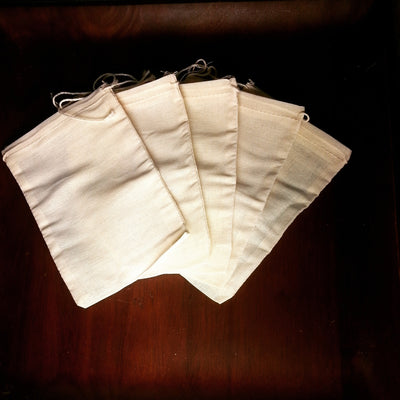
A castor oil poultice — sometimes called a castor oil pack — is simply a piece of fabric saturated with castor oil and applied to the skin over a targeted area of pain or inflammation. It sounds almost comically simple. And yet naturopathic practitioners, acupuncturists, and an increasing number of integrative physicians have prescribed it successfully for over a century. The key variables that determine effectiveness are the quality of the oil, the type of fabric used, and the duration of application.
Why organic wool or fleece — specifically?
The traditional recommendation is undyed, organic wool or wool-blend fleece, and the reason is not arbitrary. Wool's natural lanolin content and fiber structure make it uniquely suited to hold and slowly release oil into the skin over time. More importantly, organic wool is free of the synthetic dyes, chemical finishes, and pesticide residues (sheep are often treated with organophosphate insecticides) that could be absorbed into the body alongside the castor oil during prolonged application. Conventional fleece fabrics — particularly synthetic polyester — may off-gas or transfer chemical residues under the mild heat of a warm compress, which defeats the purpose of a natural healing protocol.
Organic cotton flannel is the commonly cited alternative. Both work. The principle is the same: a dense, natural-fiber cloth that holds adequate oil, maintains gentle contact with the skin, and is free of chemical contaminants that could interfere with the therapeutic goal.
How the poultice works in the body
When castor oil is held against the skin under gentle warmth, the ricinoleic acid penetrates into subcutaneous tissue and begins working on multiple levels simultaneously. Research cited in the Journal of Naturopathic Medicine and reviewed by Kennedy and Keaton (2012) found that castor oil packs applied over the abdomen produced measurable increases in lymphocyte counts within days. Lymphocytes are the white blood cells that coordinate immune response — and their elevation near treated tissue suggests the oil is actively stimulating local immune and lymphatic activity, not just sitting passively on the surface.
A separate line of evidence shows castor oil's influence on the autonomic nervous system. Studies cited by naturopathic practitioners — including those published in peer-reviewed integrative medicine journals — suggest that the packs directly stimulate the parasympathetic nervous system, responsible for rest, digestion, and healing. This "rest and restore" response helps explain why patients so commonly report feelings of deep relaxation and reduced pain during and after application, well beyond what simple warmth alone would produce.
Step-by-Step GuideHow to Make and Use a Castor Oil Fleece Pack
Part Three
What the Research Shows: Specific Conditions
Arthritis & Joint Pain
A 2011 clinical trial with 73 RA patients found castor oil reduced joint pain by over 50% and stiffness by ~48% in 15 days. A 2009 RCT found oral castor oil nearly as effective as an NSAID for osteoarthritis — without the side effects.
Muscle Soreness & Sprains
Clinical case reports document consistent success using castor oil packs for sprains, strains, and soft tissue injury. Practitioners report measurable reductions in swelling, discoloration, and pain within 24–48 hours of consistent application.
Nerve & Chronic Pain
Castor oil's mechanism of reducing Substance P makes it relevant for diabetic neuropathy, fibromyalgia, and Raynaud's syndrome — the same mechanism used by FDA-approved capsaicin patches for neuropathic pain, but without the burn.
Menstrual & Pelvic Pain
Integrative gynecologists frequently recommend castor oil packs for endometriosis, fibroids, ovarian cysts, and menstrual cramping. Anti-inflammatory and lymphatic effects appear to reduce pelvic congestion. Never use during pregnancy.
Immune & Lymphatic Support
Research by Kennedy and Keaton (2012) found 2-week courses of castor oil packs normalized lymphocyte counts and improved liver enzymes and cholesterol in patients with prior elevation — suggesting systemic benefit beyond the application site.
Wound Healing & Scars
Castor oil is a documented ingredient in FDA-cleared wound-care formulations. Its combination of antimicrobial action, tissue-hydrating fatty acids, and immune-stimulating properties accelerate wound closure and reduce scar formation.
Part Four
The Hidden Cost of OTC Pain Medications
NSAIDs — nonsteroidal anti-inflammatory drugs like ibuprofen (Advil, Motrin), naproxen (Aleve), and aspirin — are the most commonly purchased OTC medications in America. They work, and for occasional, acute use they are generally well-tolerated. But the widespread pattern of chronic, daily, or near-daily use for pain management carries risks that have been dramatically underappreciated by the general public — and even by some physicians.
NSAIDs are estimated to contribute to more than 100,000 hospitalizations and 16,000 deaths per year in the United States. One review found that 1 in 9 preventable drug-related hospital admissions was attributable to NSAID use. Cleveland Clinic advises against taking OTC NSAIDs for more than 3 consecutive days for fever or 10 days for pain without physician guidance.
The FDA has required a boxed warning — its most serious — on all NSAIDs. MedlinePlus (NIH) notes that people taking NSAIDs may have a higher risk of heart attack or stroke that can occur without warning and can be fatal, even in people without prior cardiovascular disease. A 2016 review published in the British Journal of General Practice found that all NSAIDs double the risk of hospitalization due to heart failure, and that NSAID use in adults over 65 more than doubles the risk of acute kidney injury within 30 days of initiation.
The gastrointestinal risks are equally sobering. NSAIDs inhibit prostaglandins not just in inflamed tissue but throughout the body — including in the stomach lining, where prostaglandins serve a protective function. The result is a well-documented risk of gastric ulcers, GI bleeding, and intestinal perforation that increases substantially with dose, duration, and age.
And there's one more fact worth sitting with: NSAIDs do not help your body heal — they suppress the signals your body uses to heal. As Cleveland Clinic notes, research suggests these medications can actually slow the body's natural healing process. For acute injury management, this trade-off may be acceptable. For ongoing use as a chronic pain strategy, it is worth examining carefully.
Head-to-head comparison
| Category | Topical Castor Oil / Pack | OTC NSAIDs (Ibuprofen, Naproxen) |
|---|---|---|
| Anti-inflammatory mechanism | Inhibits prostaglandins locally via ricinoleic acid; no systemic effect | Inhibits prostaglandins systemically throughout the entire body |
| GI impact | None when applied topically; does not irritate stomach lining | Documented risk of ulcers, bleeding, and GI perforation with regular use |
| Cardiovascular risk | No known cardiovascular effects from topical use | FDA boxed warning; increased risk of heart attack and stroke |
| Kidney impact | No nephrotoxic effects documented for topical application | Documented analgesic nephropathy; risk doubles in adults 65+ |
| Drug interactions | None documented for topical use | Interacts with blood thinners, antihypertensives, SSRIs, steroids |
| Effect on healing | Stimulates lymphatic activity, immune response, and tissue repair | Research suggests NSAIDs can slow the body's natural healing process |
| Use during pregnancy | Contraindicated — can stimulate uterine contractions | Contraindicated in 3rd trimester; risks throughout pregnancy |
| Long-term safety | No toxicity at therapeutic topical doses; FDA GRAS status | All NSAIDs carry a boxed warning; chronic use linked to multiple serious adverse events |
| Cost per treatment | ~$0.50–$1.00 per session; cloth reusable 20–25 times | Variable; ongoing cost with potential medical cost of adverse effects |
This comparison is not an argument that castor oil is superior for all situations — there are circumstances where NSAIDs are clearly appropriate, including for fever management, acute dental pain, or post-surgical inflammation under physician guidance. The argument is that for chronic and recurrent pain — the arthritis that flares on cold mornings, the lower back that aches after a long workday, the athletic soreness that shows up every week — the risk-benefit calculation looks very different than most people assume.
Part Five
Topical Benefits Beyond Pain Relief
The clinical literature on topical castor oil extends well beyond musculoskeletal applications. A 2024 clinical trial published in the Journal of Cosmetic Dermatology (Parvizi et al., Shiraz University of Medical Sciences) found that twice-daily topical castor oil cream measurably reduced melanin and erythema levels in patients with under-eye hyperpigmentation over two months. The antimicrobial properties have been validated in laboratory studies for candida-related skin and oral conditions. And the oil's extraordinary moisturizing depth — owing to its molecular size and hydroxyl group — gives it genuine efficacy for dry skin, cracked lips, scarring, and keratosis-related skin conditions.
A 2024 NIH study published in Nutrients even found anxiolytic-like (anti-anxiety) effects from castor oil and its active component ricinoleic acid — adding a neurological dimension to a compound that most people still think of primarily as a laxative.
Important Precautions
Castor oil is not a replacement for medical care. It is a complementary tool — one that happens to be ancient, remarkably safe, and backed by a growing body of peer-reviewed research. Used thoughtfully, the organic fleece poultice method can reduce your reliance on OTC drugs, support your body's own healing processes, and give you a non-pharmaceutical option for the daily aches and inflammation that, for most people, don't require a pill — they require patience, heat, and a little bit of oil-soaked cloth.
References & Sources
- Alookaran J, Tripp J. "Castor Oil." StatPearls [Internet]. Updated May 24, 2024. NCBI NBK551626
- Vieira C et al. "Effect of ricinoleic acid in acute and subchronic experimental models of inflammation." Mediators of Inflammation, Vol. 2000. PMC1781768
- Parvizi MM et al. "Efficacy of castor oil cream in treating infraorbital hyperpigmentation." Journal of Cosmetic Dermatology, 23(3):911-917. 2024. PubMed 37927123
- Nisbett KE, Vendruscolo LF. "Preliminary Evidence of an Anxiolytic-like Effect of Castor Oil and Ricinoleic Acid." Nutrients, 16(10):1527. May 2024. PMC11124509
- Kennedy DA, Keaton D. "Evidence for the Topical Application of Castor Oil." Journal of Naturopathic Medicine, 2012.
- Medhi B et al. "Comparative clinical study of castor oil and diclofenac sodium in osteoarthritis." Phytotherapy Research, 23(10):1469-73. 2009.
- Arslan GG, Eşer I. "An examination of the effect of castor oil packs on constipation in the elderly." Complementary Therapies in Clinical Practice, 17(1):58-62. 2011.
- Gronick C, ND. "An Introduction to the Castor Oil Pack and Its Many Uses." drchelseagronick.com
- Ruscio M, DC. "DIY: How to Do a Castor Oil Pack." Updated January 2025. drruscio.com
- Healthline. "How to Make and Use Castor Oil Packs." Updated January 2024. healthline.com
- McGettigan P, Henry D. "Cardiovascular risk and inhibition of cyclooxygenase: a systematic review." JAMA, 296(13):1633-44. 2006.
- Wehling M. "Non-steroidal anti-inflammatory drug use in chronic pain conditions." Eur J Clin Pharmacol, 2014. PMC4809680
- Bhala N et al. "Vascular and upper gastrointestinal effects of non-steroidal anti-inflammatory drugs." The Lancet, 382(9894):769-79. 2013.
- Cleveland Clinic. "Is It Bad to Take Ibuprofen Every Day?" Updated August 2025. clevelandclinic.org
- Cleveland Clinic. "NSAIDs: When To Use Them and for How Long." Updated December 2025. clevelandclinic.org
- MedlinePlus / NIH. "Ibuprofen Drug Information." medlineplus.gov
- Wongrakpanich S et al. "A Comprehensive Review of Non-Steroidal Anti-Inflammatory Drug Use in The Elderly." Aging and Disease, 9(1):143-150. 2018. PMC5772852
- The Form Practice. "Castor oil for joint pain relief." 2022. theformpractice.com
This article is for educational and informational purposes only and does not constitute medical advice, diagnosis, or treatment. Always consult a qualified healthcare provider before beginning any new health practice, especially if you are pregnant, nursing, managing a chronic condition, or taking prescription medications. The science on castor oil is still developing, and not all traditional uses have been confirmed in large-scale clinical trials.